John 1:43-51 The next day Jesus decided to leave for Galilee. Finding Philip, he said to him, “Follow me.” Philip, like Andrew and Peter, was from the town of Bethsaida. Philip found Nathanael and told him, “We have found the one Moses wrote about in the Law, and about whom the prophets also wrote– Jesus of Nazareth, the son of Joseph.” “Nazareth! Can anything good come from there?” Nathanael asked. “Come and see,” said Philip. When Jesus saw Nathanael approaching, he said of him, “Here is a true Israelite, in whom there is nothing false.” “How do you know me?” Nathanael asked. Jesus answered, “I saw you while you were still under the fig tree before Philip called you.” Then Nathanael declared, “Rabbi, you are the Son of God; you are the King of Israel.” Jesus said, “You believe because I told you I saw you under the fig tree. You shall see greater things than that.” He then added, “I tell you the truth, you shall see heaven open, and the angels of God ascending and descending on the Son of Man.”
We all have our doubts! You may doubt politicians, weathermen, economic predictions and sports teams. Not only to we doubt things, we are usually quick to express out doubts. “I don’t think it will work.” “We’ve never done it that way before.” Doubt is part of our lives.
The passage above, like many passages of Scripture, addresses doubt. Doubt is perfectly normal, but there is one doubt that can be especially damaging in our lives: doubting the existence of God and His love for us. The world prides itself in knowledge. We are an educated people, we live in the information age, and many people think that modern science and technology hold the answers to everything. People who think this way often eliminate the need for a God, so they doubt His existence.
But the good news is that Jesus accepts our doubt. He does not reject a person simply because of questions or doubts. While recruiting His disciples, He told Philip to follow Him. Philip was anxious to share the news, so he went to Nathanael and tells him: We have found the one Moses wrote about in the law, and about whom the prophets also wrote–Jesus of Nazareth, the son of Joseph. He was saying that Jesus was the Messiah, the Savior God had promised. But Nathanael had his doubts. He was from Cana, a town that was close to Nazareth. As is typical of towns that were close together, there was a rivalry of sorts between Cana and Nazareth. It was normal for the people of one town to make disparaging remarks about those from the other town. Nathanael did not expect a king or a Messiah to come from Nazareth.
In addition, Nathanael was familiar with the Old Testament prophecies concerning the Messiah. We are told that he was found under a fig tree. In that day, that was the place recommended by the rabbis for studying the Scripture. Whenever the Bible speaks of someone sitting under a fig tree, we understand that to be a reference to sitting there for the purpose of study and reflection upon God’s Word. Being a student of the Scriptures, then, Nathanael knew that there was no clear prophecy stating that the Messiah would come from Nazareth. This, along with the fact that he was from the rival town of Cana, leads him to doubt and declare with a holier-than-thou-attitude: CAN ANYTHING GOOD COME FROM NAZARETH?
Yet Jesus accepted him — In spite of His doubts, Nathanael became a disciple. Jesus recognized that there was honesty in doubt. Doubt doesn’t want to be taken in. It probes and examines. It rejects what is false. It doesn’t settle for anything less than the truth. Nathanael was as anxious as the next guy for the coming of the Messiah, but his doubt told him not to accept just anyone who claimed to be that Messiah. He wanted to check it out. And Jesus provided proof to overcome his doubts. He displayed that He was the all-knowing God. He told Nathanael that He had been sitting under a fig tree, which He did not see with human eyes. Jesus also makes a judgment as to his moral character, saying there is nothing false in him. That gave Nathanael some of the proof he needed, and he declared, YOU ARE THE SON OF GOD.
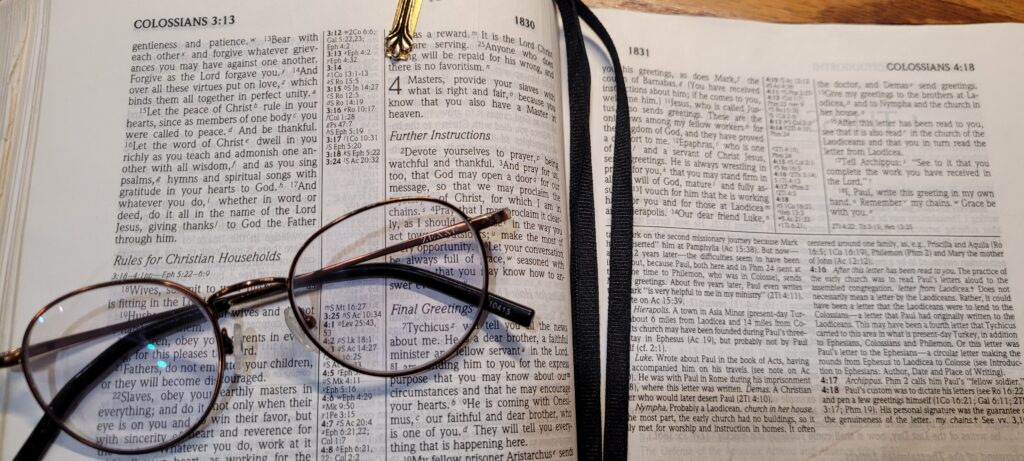
You have also been given proof to overcome your doubts. That proof comes in many forms. One source of proof is the Bible itself. When you read and study God’s Word, you find in it comfort and assurances.
Another proof that God offers as to His existence is His love, displayed in many ways. He cares for you by providing a world that has everything you need to support your lives. He gives air to breathe, water to drink, food to eat, and every other necessity. And your bodies themselves are miracles. They function under the laws that God has established. Your digestive systems extract nutrients from food. Your skin regulates your body temperature by perspiration. When you get sick, your body has a built-in defense mechanism that fights the illness.
The most obvious proof that we have of God’s love is that He paid the ultimate price, the death of His Son, so that the world might live. Jesus suffered, died and rose again in order to give you what you need the most–forgiveness of sins and eternal life. If you look to Jesus Christ and what He has done for you, you will find the proof you need to overcome your doubts.