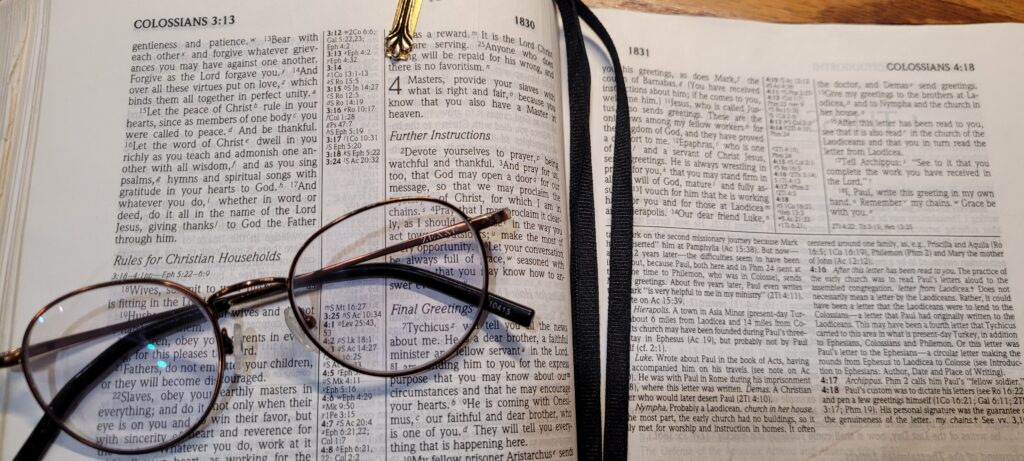
Acts 18:1–11 After this, Paul left Athens and went to Corinth. There he met a Jew named Aquila, a native of Pontus, who had recently come from Italy with his wife Priscilla, because Claudius had ordered all the Jews to leave Rome. Paul went to see them, and because he was a tentmaker as they were, he stayed and worked with them. Every Sabbath he reasoned in the synagogue, trying to persuade Jews and Greeks. When Silas and Timothy came from Macedonia, Paul devoted himself exclusively to preaching, testifying to the Jews that Jesus was the Christ. But when the Jews opposed Paul and became abusive, he shook out his clothes in protest and said to them, “Your blood be on your own heads! I am clear of my responsibility. From now on I will go to the Gentiles.” Then Paul left the synagogue and went next door to the house of Titius Justus, a worshiper of God. Crispus, the synagogue ruler, and his entire household believed in the Lord; and many of the Corinthians who heard him believed and were baptized. One night the Lord spoke to Paul in a vision: “Do not be afraid; keep on speaking, do not be silent. For I am with you, and no one is going to attack and harm you, because I have many people in this city.” So Paul stayed for a year and a half, teaching them the word of God.
We were able to visit Corinth last month. This is the city where Paul first met Pricilla and Aquila, fellow tentmakers. Our tour guide mentioned there was a structure in the ruins of ancient Corinth that we visited where they found tools that were common to tentmakers. Perhaps the three had set up shop while there in Corinth.
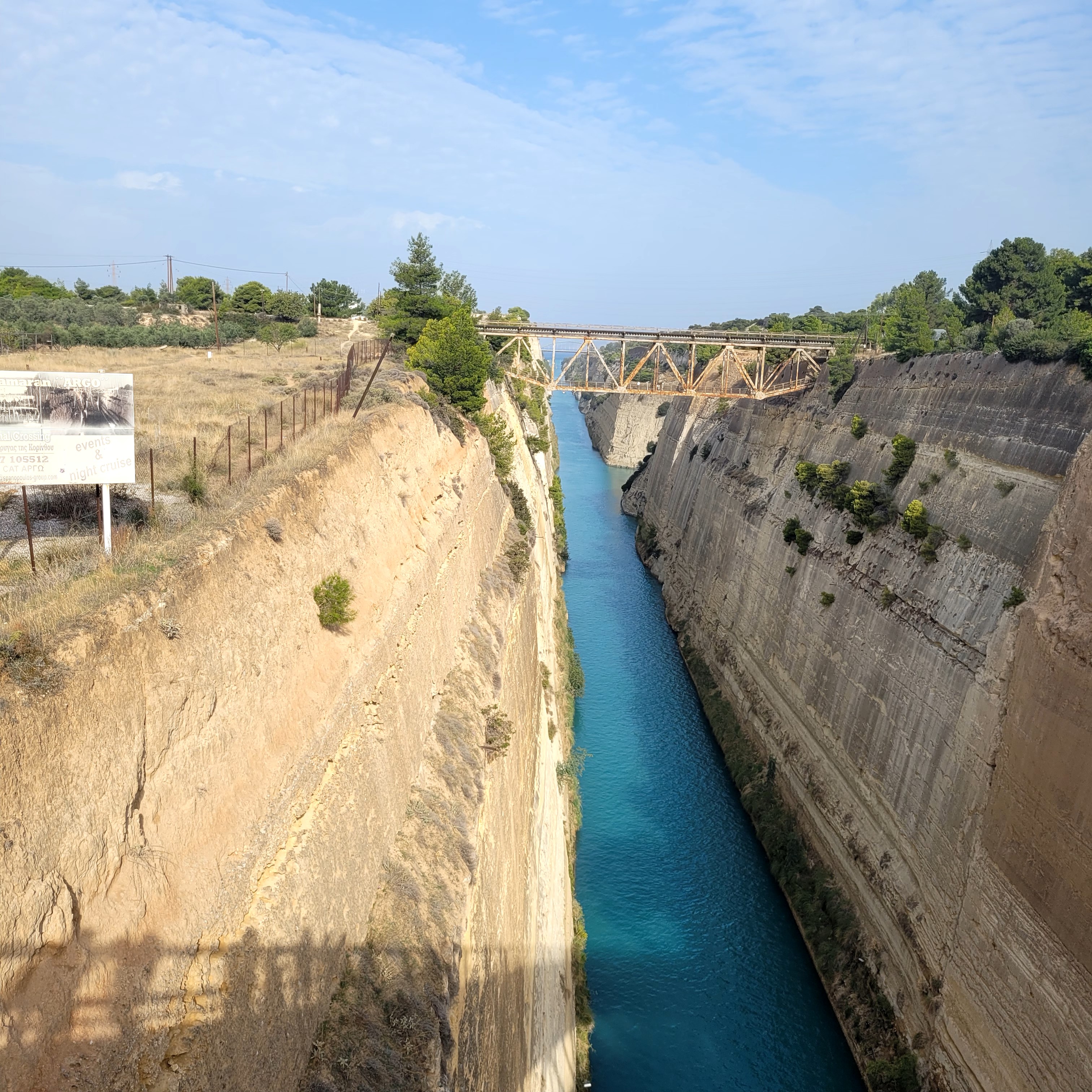
You may have heard that it was a port town. There were actually two ports. Corinth is situated on the isthmus that separates the Aegean Sea from the Adriatic Sea, and the Peloponnese peninsula from the rest of the mainland of Greece. Today, there is a canal, only four miles long, that enables ships to go from one sea to the other without having to sail all the way around the peninsula. That trip could be a treacherous journey, one that was avoided if possible. In Paul’s day, there was no canal, but they would often transport the cargo across the narrow strip of land from one ship to another. They even built a track that would enable them to transport ships across the isthmus. They found ways to overcome an obstacle.
Paul faced a lot of obstacles in his work as a missionary. It was no different in Corinth. Many of the Jews rejected his preaching and became abusive. They opposed him and tried to be an obstacle to his further ministry there. But there were also those who believed his message and were baptized, including the synagogue ruler and his household. Paul’s task was to introduce people to the Savior so that the Holy Spirit could work through him. Tell people that Jesus loves them, that He lived for them, that He died to pay for their sins and earn their forgiveness. Tell them that He also conquered death for them so that they could live at peace with God forever, starting now. Preach and teach God’s truth and let the Holy Spirit work in the hearts of those who hear.
The Lord offered a special word of encouragement to Paul in a vision.
“Do not be afraid; keep on speaking, do not be silent. For I am with you, and no one is going to attack and harm you, because I have many people in this city.”
The pictures below are from a bridge that spans the Corinthian canal. In the distance you can see the Aegean Sea in one and the Adriatic Sea in the other.