Acts 17:16–21 While Paul was waiting for them in Athens, he was greatly distressed to see that the city was full of idols. So he reasoned in the synagogue with the Jews and the God-fearing Greeks, as well as in the marketplace day by day with those who happened to be there. A group of Epicurean and Stoic philosophers began to dispute with him. Some of them asked, “What is this babbler trying to say?” Others remarked, “He seems to be advocating foreign gods.” They said this because Paul was preaching the good news about Jesus and the resurrection.
Our tour in the Footsteps of Paul had us spend three nights in Athens. We went out from there to explore other sites, but we also spent some time seeing the Acropolis and the Areopagus. One of the questions that occurred to me was, “I wonder why there is not a book of the Bible called ‘Athenians?’ Why didn’t Paul send a letter to the believers in this prominent city?” I won’t have an answer to that question on this side of heaven, and once I am there it won’t matter anymore.
Ancient Greek cities had an area known as the acropolis. The word literally meant “highest point in the city.” The purpose was twofold: there would be a citadel or fortress to protect the city if attacked, but it also had a religious significance in that it represented a nearness to the gods.
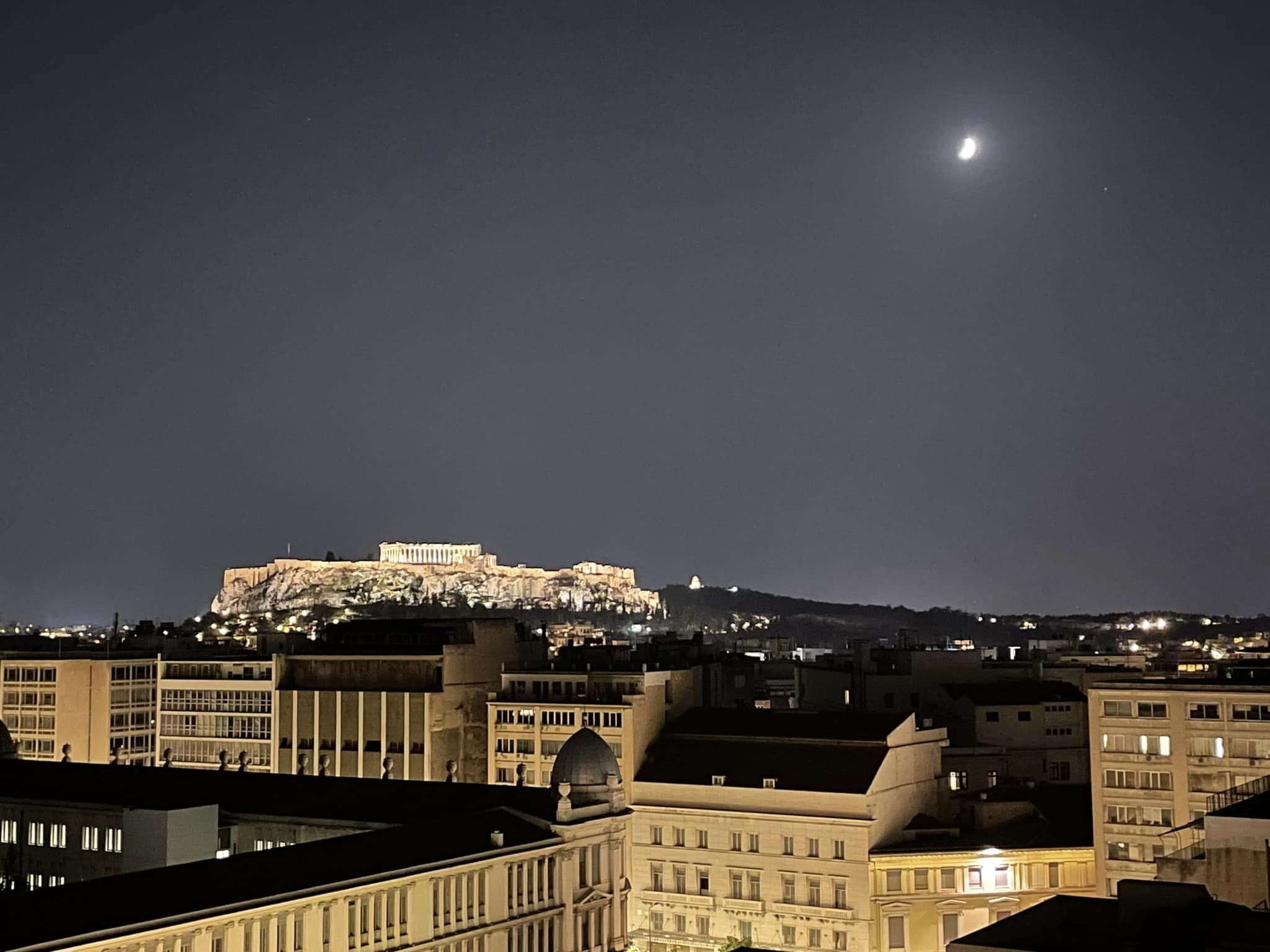
The hotel we stayed in had a rooftop dining area and bar with an incredible view of the Acropolis which was lit up each night. The Parthenon, the largest and most visible temple on the Acropolis of Athens, was dedicated to Athena, the goddess of wisdom and warfare, and most likely the one from whom the city derived its name. There were other temples up there as well. There was one known as the Erechthion that had portions dedicated Athena Polias (protector of the city), Poseidon (god of the seas) and to Zeus (king of the gods). There was also a smaller temple to Athena Nike (goddess of victory).
It is no wonder Paul was greatly distressed to see that the city was full of idols. But that did not deter him from proclaiming the one who encountered him on the road to Damascus. Paul was all about sharing the good news about Jesus and his resurrection with anyone and everyone. He shared that there was no other way to forgiveness of sins and life eternal except for Jesus. And people were listening. The Holy Spirit was working.