Luke 24:13-35 Now that same day two of them were going to a village called Emmaus, about seven miles from Jerusalem. They were talking with each other about everything that had happened. As they talked and discussed these things with each other, Jesus himself came up and walked along with them; but they were kept from recognizing him. He asked them, “What are you discussing together as you walk along?” They stood still, their faces downcast. One of them, named Cleopas, asked him, “Are you only a visitor to Jerusalem and do not know the things that have happened there in these days?” “What things?” he asked. “About Jesus of Nazareth,” they replied. “He was a prophet, powerful in word and deed before God and all the people. The chief priests and our rulers handed him over to be sentenced to death, and they crucified him; but we had hoped that he was the one who was going to redeem Israel. And what is more, it is the third day since all this took place. In addition, some of our women amazed us. They went to the tomb early this morning but didn’t find his body. They came and told us that they had seen a vision of angels, who said he was alive. Then some of our companions went to the tomb and found it just as the women had said, but him they did not see.” He said to them, “How foolish you are, and how slow of heart to believe all that the prophets have spoken! Did not the Christ have to suffer these things and then enter his glory?” And beginning with Moses and all the Prophets, he explained to them what was said in all the Scriptures concerning himself. As they approached the village to which they were going, Jesus acted as if he were going farther. But they urged him strongly, “Stay with us, for it is nearly evening; the day is almost over.” So he went in to stay with them. When he was at the table with them, he took bread, gave thanks, broke it and began to give it to them. Then their eyes were opened and they recognized him, and he disappeared from their sight. They asked each other, “Were not our hearts burning within us while he talked with us on the road and opened the Scriptures to us?” They got up and returned at once to Jerusalem. There they found the Eleven and those with them, assembled together and saying, “It is true! The Lord has risen and has appeared to Simon.” Then the two told what had happened on the way, and how Jesus was recognized by them when he broke the bread.
Let’s consider last Sunday’s Gospel reading a bit more. These two men who had followed Jesus were walking from Jerusalem to the village of Emmaus, a distance of about seven miles. They were talking about all the events of the weekend, mostly the crucifixion. Jesus appeared to them, but somehow, probably by supernatural means, they were kept from recognizing Him. They tell this “stranger” all about what had happened to Jesus in Jerusalem. They explain how the authorities conspired to convict Him. They think their hope is gone. And they end by saying that the tomb had been found empty that morning, but they are not sure what to make of it all. The women claimed to see a vision of angels who proclaimed that Jesus is alive. I wonder what their tone of voice was in relating this? Did they sound skeptical or hopeful? In either case, the response of Jesus was that they were foolish! Why didn’t they believe what they should have known would happen? How foolish you are, and how slow of heart to believe all that the prophets have spoken.
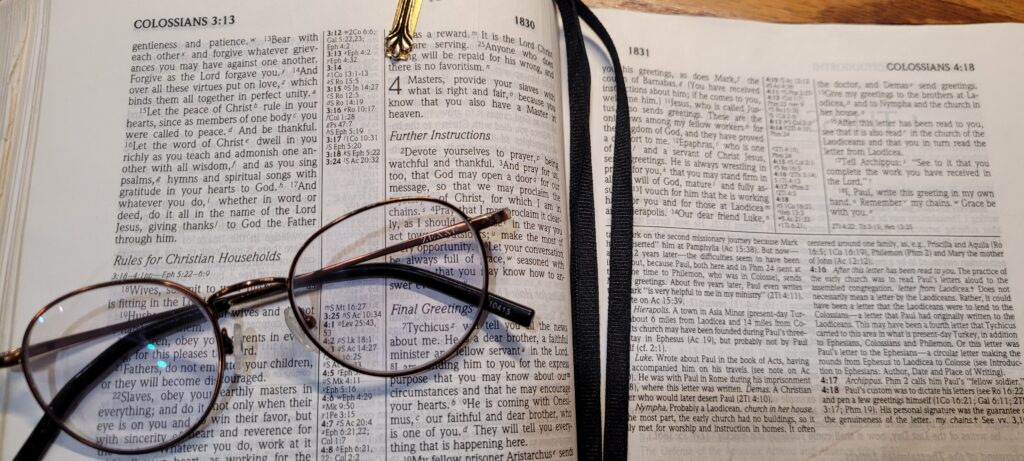
Therein lies the key to what would kindle that fire in their hearts: all that the prophets had spoken. The promise of God’s Word. And that fire was started by the Word made flesh holding a Bible Class with them as they walked along: and beginning with Moses and all the prophets, He explained to them what was said in all the Scriptures concerning Himself. I have often said that I envy those disciples, being able to listen to Jesus expound on those Old Testament texts that point to Him. But you and I have that same Word today. We can look at passages like Psalm 22, where the crucifixion was described long before it happened. We listen to Isaiah 53, where the reason for the crucifixion was foretold. Perhaps these were some of the passages Jesus shared with these two men in trying to point out: Did not the Christ have to suffer these things and then enter his glory?
God’s Word warmed their hearts. It made them burn with excitement. Jesus opened the Scriptures for them to understand. Were not our hearts burning within us while He talked with us on the road and opened the Scriptures to us? Our Lord showed them on the basis of the Word that all the frightening things that had caused them grief were part of God’s plan for their salvation. There is nothing to fear. Even death and resurrection are in God’s Hands. God’s Word is the spark that gets the fire going. And it is His Word that will keep that fire burning.
The steady flame that burns in the hearts of Christians is not fueled by emotion and sentiment, but by the message of the death and resurrection of Jesus. It is based on the certainty of God’s Word. There is nothing wrong with getting emotional and “all fired up for the Lord.” In fact it can be exhilarating. But that kind of fire can end quickly, like a flash in the pan. It is not a lasting thing. The fire that will continue to burn is the one that is fueled by the Word of God. With that Word of God, you will have a heart that is burning with Good News, and the spark to set more hearts aflame.