revmattil.org

Devotions to help you Think about God’s Word and Apply it to your Lives.

Venite

Psalm 95:1-7 Oh come, let us sing to the Lord; let us make a joyful noise to the rock of our salvation! Let us come into his presence with thanksgiving; let us make a joyful noise to him with songs of praise! For the Lord is a great God, and a great King above all gods. In his hand are the depths of the earth; the heights of the mountains are his also. The sea is his, for he made it, and his hands formed the dry land. Oh come, let us worship and bow down; let us kneel before the Lord, our Maker! For he is our God, and we are the people of his pasture, and the sheep of his hand.

Sometimes things just pop into my head. I know it is more than by chance. God puts those thoughts there for a reason. Today it was Psalm 95. And that triggered a flood of memories for me. I could hear myself singing those words in Wednesday morning chapel services in parochial school from order of Matins (The Lutheran Hymnal, 1941). Versions of that service are still in use today. That led me to reflect on these words and do a little digging into the origins of “The Venite” as it is commonly known, from the Latin word that means “Come.”

There have been different versions of this canticle over the years. Some included the last four verses of the Psalm 95, which speak of God’s judgment.

I have always appreciated it as a call to worship. And while it is a song that sings the praises of our God and speaks of His greatness, did you notice that it is not addressed to God? It is an invitation to other people to join us in worshipping, bowing down, kneeling and making a joyful noise unto the Lord! That is how I remember it in chapel, encouraging others to worship God with us. Why? “For the Lord is a great God, and a great King above all gods. In His hands are the deep places of the earth, the strength of the hills is His also … For He is our God, and we are the people of His pasture and the sheep of His hand.”

I have a great appreciation for this reminder to not only sing the praises of our God, but to joyfully urge others to do so with us. And while I love singing “The Venite” I grew up with, I also recognize that our worship is not limited to the ancient liturgies the church. I love how many of the new songs of our day sing of about how great God is. One that comes to mind is the Newsboys’ song “The Greatness of our God.” It is joyful worship!

One of the interesting things I discovered while researching the history of this canticle comes from the establishment of the Church of England in the 1500s. Parliament passed The Act of Supremacy in 1534 which transferred control of the Catholic Churches in England from the Pope to King Henry VIII. In an attempt to normalize things, they developed the Book of Common in Prayer. In 1549, Parliament passed the Act of Uniformity, a law that “mandated life imprisonment for those who conducted Christian Worship not in conformity with the Book of Common Prayer.”  I guess worship wars have always been around.

When I read that, I was struck how that runs counter to the intent of Psalm 95. Telling people there is only one way to worship is a far cry from inviting other to make a joyful noise to the Rock of our salvation! The Old Testament is filled with references of worshipping God with songs and all kinds of instruments and even dancing.

And let’s not forget why we worship. Our Good Shepherd came down here to lay down His life for us, the sheep. We had strayed, were in peril of perishing forever, so He came to rescue us. Our destiny was destruction, but Jesus bought us back from sin and death and gives us life and salvation instead. We receive this by trusting that He is our Redeemer. And now we want to follow Him, sing His praises, and tell others to join us in being “the people of His pasture and the sheep of His hand.”

Oh come, let us sing to the Lord; let us make a joyful noise to the rock of our salvation!


Venite2025-11-18T17:05:00-06:00

Deceivers

One of the Bible Studies I have been attending has been looking at what Scripture has to say about the End Times. It is a topic that holds the interest of people, but often leaves us with more questions that answers. Some of the things we would like to know are beyond our ability to understand. But we do know that when Christ returns, He will gather the faithful to Himself.

One of the passages we looked at recently Revelation 13. As we were reading that chapter, these words caught my attention.

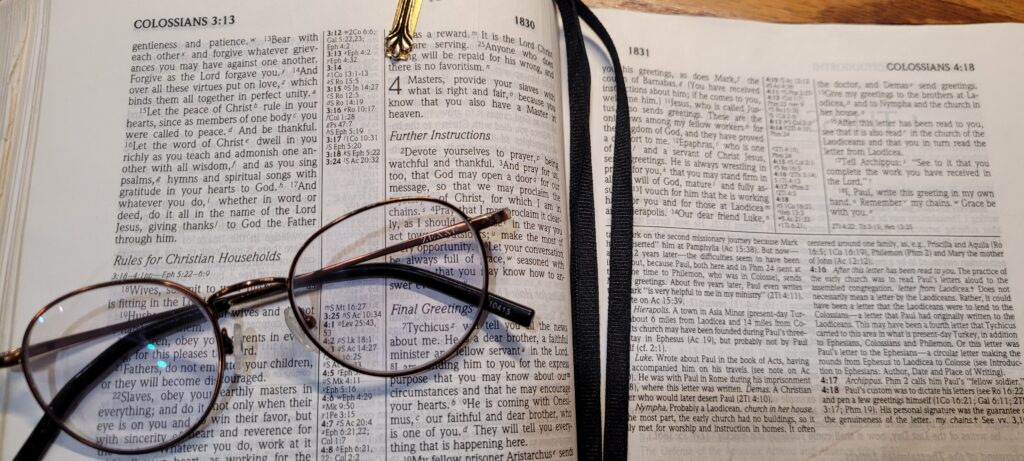
Revelation 13:11 Then I saw another beast, coming out of the earth. He had two horns like a lamb, but he spoke like a dragon.

We have all been warned of “a wolf in sheep’s clothing,” but here we are told there will be a dragon in sheep’s clothing. There have been, there are, and there will be those who claim to be speaking the Word of God, but are doing just the opposite.

Social media is filled with people who identify themselves as pastors and proceed to tell people that the Bible is wrong, that you shouldn’t call sin what it is, and that true love accepts people the way they are and doesn’t try to make them conform to the life God identifies as pleasing to Him.

There is a guy who has a feed called “The Holy Nope.” He starts his clips walking into a church, taking a seat and opening His Bible and saying, “It’s the Lord’s day, I’ve got my Bible and I ready to hear the Word.” Then he shows a clip of these characters that are proclaiming all kinds of heresies and falsehoods and demanding people give them money and the like. The clips end with him standing up, closing his Bible, saying “Nope!” and walking out.

I share this because each of you needs to be sure you are in the Word for yourself. How else will you know if someone is telling you the truth or leading you astray. There are dragons in sheep’s clothing. Scripture warns you about this.

1 John 4:1 Dear friends, do not believe every spirit, but test the spirits to see whether they are from God, because many false prophets have gone out into the world.

You “test the spirits,” the messages others proclaim, by comparing them to the clear Word of God. You want a litmus test? How about this:

2 John 7 Many deceivers, who do not acknowledge Jesus Christ as coming in the flesh, have gone out into the world. Any such person is the deceiver and the antichrist.

Those who refuse to proclaim Jesus as the Son of God who took on flesh, who paid for the sins of all people and defeated death for everyone, those folks are not to be trusted.

Keep your eyes focused on Christ and His Word. He keeps His promises and will not lead you astray.

Deceivers2025-11-17T19:37:46-06:00

The Belt

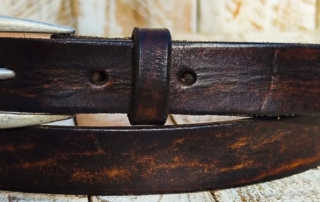
At church yesterday our Director of Christian Education shared the memory of his father’s belt. Those of a certain age remember when the belt did more than hold up your dad’s trousers. It was also an instrument of discipline. While he was speaking, I recalled growing up and sharing a bedroom with my older brother. Some nights after we were sent to bed we would be fooling around and playing rather than going to sleep. Our father would come down the hallway and open the door, leading us to scamper into our beds and get under the covers. He would stare us down, with his hand on his buckle and say, “Do I have to take off my belt?” In my mind, I recalled the times he had pulled the belt out of all the loops on his pants and I could almost hear that haunting sound from “The Good, The Bad and the Ugly.”  We would plead with him not to do so, for we had both received the unwelcomed consequence of him doing so in the past. The threat was enough to get us to behave and go to sleep.

Romans 13:3 For rulers hold no terror for those who do right, but for those who do wrong. Do you want to be free from fear of the one in authority? Then do what is right and he will commend you.

When speaking of governments, Paul reminds us that those who obey the rules have no need to worry. And for the most part, that is true, even under many corrupt rulers.  Law abiding citizens do not need to fear being punished. That was also true in our home. If we obeyed the rules, there was no threat of punishment.

But what about before God?  The reality is, no matter how hard we try to live as God would have us live, we always fall short. We are all as guilty as my brother and I were when dad came down the hall. We deserved to be punished. Paul spoke about that in Romans 7.

Romans 7:18, 24 I know that nothing good lives in me, that is, in my sinful nature. For I have the desire to do what is good, but I cannot carry it out. … What a wretched man I am! Who will rescue me from this body of death?

Because of our sin, we all deserve condemnation. But God provided us a way out, a rescue from the punishment we deserve.

Romans 7:25 Thanks be to God—through Jesus Christ our Lord!

Jesus came and took the punishment you deserve. He bore the consequences of your sin in His Body on the cross. He paid the price for you to be forgiven and redeemed and restored to God’s good graces.

The discipline I received as a child from my dad’s belt – which was deserved – is actually a reminder of wonderful the grace of God is. Jesus stepped in to take my punishment so that I could be forgiven and be with Him forever. He rescued me from my body of death.

The Belt2025-11-16T18:47:31-06:00

Torn Clothes

This past week I was walking into a store and noticed the lady walking in front of me. She was probably in her forties. She had her hair nicely done, lots of makeup and jewelry, a nice black sweater and a pair of faded blue jeans that were frayed at both knees and a few other places. A few days later I was at a board meeting and one of the attendees of similar age had a similar pair of jeans. I know it has long been a trend and fashion statement to wear jeans that have holes in them and obviously display bare threads.

While that is not my thing, seeing those jeans took me back to the fifth grade at Our Redeemer Lutheran School. One of our regular activities for P.E. was playing kickball on the asphalt church/school parking lot. On this day, I was wearing a new pair of blue jeans for the first time. When I was “at bat” I got a hold of one, had a good kick, and I took off around the bases. When I rounded second, I stumbled and went down hard. My new denims were no match for the asphalt. I had holes in both knees, not to mention huge scrapes on both of my hands. My hands and knees both hurt and were bleeding, but I was more concerned about how mom would react to me “ruining” another pair of pants. Let’s just say I was hard on my clothes. But I think this was the first time I did so the first time I wore something.

Mom was less than thrilled. She didn’t think those holes in the knees of my new jeans were a proper fashion statement. But after rolling her eyes, she got out her sewing kit and sewed patches on them like she had mended so many other pairs of my pants over the years.

You are probably aware that in Scripture, torn clothes were a gesture that displayed intense emotions. When I tore the knees in my jeans, I was upset I didn’t make it all the way around the bases and scared about facing my parents after ruining a new pair of pants. But the emotions expressed by torn clothes in Scripture were more profound.

  • Jacob tore his clothing as a show of grief when his sons falsely told him that Joseph was killed by a wild animal (Genesis 37:34).
  • Job expressed his grief by ripping his garments after hearing that all his children had been killed (Job 1:18-20).
  • King Josiah displayed outrafe when he tore his clothes, because his secretary read the words of the Book of the Law and the king was made aware of how the people had sinned against God (2 Kings 22:11).
  • Joshua and Caleb tore their garments in distress after the Israelites rebelled against entering the Promised Land (Numbers 14:6).
  • Paul and Barnabastore their clothes to show their horror at being mistaken for gods, an act of rejection and blasphemy (Acts 14:14).

Perhaps torn clothes can remind us of the grief and remorse we should feel over the ways we have offended our God. We do things every day that are outside of His plan for our lives. We continue to sin and fall short of who God would have us be as His children, those who have been washed and claimed and named by Him as part of His family. That happened in Baptism, and our faith assures us that what Jesus earned through His life and death and resurrection are ours as a gift from God. Torn clothes remind us to repent and receive the forgiveness God offers us through Jesus.

When I think of how my mom lovingly patched my clothes so I could continue to wear them, I am reminded of how Jesus covers my sin with His perfection so that I can go on living in the certainty that I am a forgiven child of God. The torn places were still there, but they were covered up, just like the wounds and scars of our offenses are still there, but have been “patched” by what Jesus did and gives to us.

Isaiah 61:10 I delight greatly in the Lord; my soul rejoices in my God. For he has clothed me with garments of salvation and arrayed me in a robe of righteousness, as a bridegroom adorns his head like a priest, and as a bride adorns herself with her jewels.

Torn Clothes2025-11-15T10:35:12-06:00

Witness One: The Spirit

Yesterday I brought up the theme “Blood and Water Flowed” as a retreat my bride and I led this year. Today I want to start talking about the witnesses to Jesus we spoke about there. Again, this was the passage that guided our thoughts:

1 John 5:6–8 This is the one who came by water and blood—Jesus Christ. He did not come by water only, but by water and blood. And it is the Spirit who testifies, because the Spirit is the truth. For there are three that testify: the Spirit, the water and the blood; and the three are in agreement.

Blood and Water, the things mentioned throughout Scripture, the things that flowed from Jesus side as He was pierced by that spear while hanging on the cross where He laid down His life for you…these are the things of which the Spirit of God testifies and uses in powerful ways to cleanse and sanctify and forgive us. And don’t forget that the Spirit of God is truly God. He was present and part of creation, present and part of the Baptism of our Lord, promised by Jesus to His disciples, poured out on Pentecost and through the proclamation of God’s Word. God Himself is present with us still, testifying to the truth of the forgiveness and life and salvation that are ours and given through means of blood and water. This is the message the Spirit of God preserved for us by leading men to write His Word.

The Holy Spirit testifies that Jesus is the Son of God in two very important ways: (1) The Spirit descended on Jesus at his baptism (Jn 1:32–34), and (2) he continues to confirm in the hearts of believers the apostolic testimony that Jesus’ baptism and death verify that he is the Christ, the Son of God (2:27; 1Co 12:3).

2 Peter 1:21 For prophecy never had its origin in the will of man, but men spoke from God as they were carried along by the Holy Spirit.

It is God Himself, the Holy Spirit, who gives us His message. There will be false prophets who try to point us to someone or something other than Jesus. The Spirit warns us about this.

1 John 4:1-3  Dear friends, do not believe every spirit, but test the spirits to see whether they are from God, because many false prophets have gone out into the world. This is how you can recognize the Spirit of God: Every spirit that acknowledges that Jesus Christ has come in the flesh is from God, but every spirit that does not acknowledge Jesus is not from God. This is the spirit of the antichrist, which you have heard is coming and even now is already in the world.

False prophets will downplay and even deny Jesus Christ as Lord and God and Savior. A true prophet will reflect Jesus Christ in what He says and what He does. And here is the message you need to hear: Christ Jesus came into this world to save sinners. That is acknowledging Jesus Christ, believing and saying that He took the price of sin upon Himself and paid it in full with His sacrifice of Himself on a cross. Jesus rose again to announce His victory that He shares with any and all who will put their faith in Him. He invites you to be His children and live a new life, in His power, a life that wants to obey His laws in response to the forgiveness He has already given you. Your life will not be free from pain and suffering, but you will have the certainty of God’s love, His forgiveness, and eternal salvation.

The Spirit of God continues to testify to this truth still today and will do so until our Lord returns.

Witness One: The Spirit2025-11-11T17:20:04-06:00

Blood and Water Flowed

Cheryl and I led a retreat earlier this year under the theme “Blood and Water Flowed.”  It was based on this passage:

1 John 5:6–8 This is the one who came by water and blood—Jesus Christ. He did not come by water only, but by water and blood. And it is the Spirit who testifies, because the Spirit is the truth. For there are three that testify: the Spirit, the water and the blood; and the three are in agreement.

We spent a lot of time talking about how Jesus came by water and the blood. The water points to Jesus’ baptism, and blood points us to His death. These are mentioned because Jesus’ ministry began at his baptism and ended at his death. Blood and water are both part of the crucifixion as well. Jesus’ Baptism and crucifixion revealed the love of God and accomplished His will for the salvation of the world

Throughout this letter John has been insisting that Jesus Christ is God as well as man. He now asserts that it was this God-man Jesus Christ who came into our world, was baptized and died. Jesus was the Son of God not only at his baptism but also at his death.

We need to be careful not to overlook the third witness mentioned in this passage, the third that testifies that Jesus is our Lord and Savior. In addition to the blood and the water there is ”the Spirit who testifies.”  

For there are three that testify: the Spirit, the water and the blood; and the three are in agreement.

You may recall that the Old Testament law required things be substantiated by “two or three witnesses” in important matters.

Deuteronomy 17:6 On the testimony of two or three witnesses a man shall be put to death, but no one shall be put to death on the testimony of only one witness.

The Holy Spirit, the water of Christ’s Baptism, and the blood of His death on the cross all bear witness that this man, Jesus of Nazareth, is the Christ of Israel and the divine Son of God.

Over the next few days I’ll share some thoughts about each of these “witnesses.”

Blood and Water Flowed2025-11-11T17:11:58-06:00

Jehoshaphat – Part 3


So far we have heard how Jehoshaphat, knowing that he would be attacked by a vast army, prayed to the Lord. The Lord told the king to wait. Go out to face the army, and wait for the Lord. The story goes on…

2 Chronicles 20:18-19 18 Jehoshaphat bowed with his face to the ground, and all the people of Judah and Jerusalem fell down in worship before the LORD. 19 Then some Levites from the Kohathites and Korahites stood up and praised the LORD, the God of Israel, with very loud voice.

Humble yourself and worship in God’s presence. That is what Jehoshaphat decided to do. He was so moved that God had answered his prayer, he was literally awestruck. How great was this God who would come to help!

How often do you do that? How often are you so overwhelmed by God’s goodness that you get down on your knees and thank Him? When you are amazed at what God has done in your family, in your marriage, in your church, in your life, it’s a pretty good indication that you’re depending on Him. When you recognize His goodness, don’t forget to do what Jehoshaphat did: Give thanks and praise to God.

2 Chronicles 20:20-21 Early in the morning they left for the Desert of Tekoa. As they set out, Jehoshaphat stood and said, “Listen to me, Judah and people of Jerusalem! Have faith in the LORD your God and you will be upheld; have faith in his prophets and you will be successful.” After consulting the people, Jehoshaphat appointed men to sing to the LORD and to praise him for the splendor of his holiness as they went out at the head of the army, saying: “Give thanks to the LORD, for his love endures forever.”

“Have faith in the Lord your God.” Jehoshaphat was telling the people, “We recognize God’s power and He’s on our side! We’ve asked Him to help. He’s given us guidance. We humbled ourselves and worshiped Him. Now it’s time for us to trust in God’s plan. He set the stage. All we’ve got to do is what He told us to do …” … which, in their case, was to go to the battlefield and simply watch.  Watch what God was going to do. Except that it wasn’t that simple. It was pretty risky. It required them to walk into a battle, a deadly conflict, completely vulnerable. If God didn’t come through, they were dead. Literally. That’s what it means to depend on God.

Now, you and I will probably never be told by God to do something that risky or dramatic. But there are areas of your life and mine where God is saying to us in a very specific way “trust my plan and I’ll help you.” That’s the issue. Everyone of us has to make a commitment to our way or a commitment to His way. You can recognize God’s power, ask for his help, listen for his guidance, humble yourself and worship, but in the end you’ve still got to do what he says. Anything less is self-reliance. And we’ve already said that God is not interested helping self-reliant people. Fortunately, for Jehoshaphat and company, they did the risky thing – marched right out on the battlefield, not with swords, but with songs.

The conclusion of this story tomorrow.

Jehoshaphat – Part 32025-11-07T19:46:33-06:00

Jehoshaphat – Part 2

The story of Jehoshaphat continues…

2 Chronicles 20:10-12 “But now here are men from Ammon, Moab and Mount Seir, whose territory you would not allow Israel to invade when they came from Egypt; so they turned away from them and did not destroy them. See how they are repaying us by coming to drive us out of the possession you gave us as an inheritance. O our God, will you not judge them? For we have no power to face this vast army that is attacking us. We do not know what to do, but our eyes are upon you.” 

Jehoshaphat asked God to help him as he was about to be attacked. He recognized his own helplessness, and asked the One who was able to help him. That sounds pretty obvious. But think about it – when you come up against a difficult situation, what’s the first thought that goes through your head? If you’re like me, it’s usually “what am I going to do?” That’s a self-reliant thought. A God-dependent thought would be “Hey God, what do you want to do?” You know that you are depending on God when that thought comes first. “God, what do you want to do?”  Jehoshaphat didn’t say: “Oh, no, I’m the king! It’s all up to me! What am I going to do?” The first thing he did was say, “Let’s ask God.” And when you ask God, be ready for an answer.

2 Chronicles 20:13-17 All the men of Judah, with their wives and children and little ones, stood there before the LORD. Then the Spirit of the LORD came upon Jahaziel son of Zechariah, the son of Benaiah, the son of Jeiel, the son of Mattaniah, a Levite and descendant of Asaph, as he stood in the assembly. He said: “Listen, King Jehoshaphat and all who live in Judah and Jerusalem! This is what the LORD says to you: ‘Do not be afraid or discouraged because of this vast army. For the battle is not yours, but God’s. Tomorrow march down against them. They will be climbing up by the Pass of Ziz, and you will find them at the end of the gorge in the Desert of Jeruel. You will not have to fight this battle. Take up your positions; stand firm and see the deliverance the LORD will give you, O Judah and Jerusalem. Do not be afraid; do not be discouraged. Go out to face them tomorrow, and the LORD will be with you.’”

Depending on God means that you listen for His guidance. You recognize His power, you ask for His help and then you wait until He answers you. This is where it gets hard – waiting for an answer from God. The tendency is to say, “Ok, I’ve asked God to help, now I’m going to get out there and fight” which usually means, “I’ll pray and then I’ll go ahead and do what I had planned. I’ll listen, but only for the answer that I want to hear.” Sometimes God may actually tell you what you want to hear. But His answer may be something far different from what you expect. God’s guidance may be “you will not need to fight. Just wait.” It is waiting for the Lord.

The people of the Old Testament understood about waiting. God had promised a Savior. Those who believed that promise waited in faith until God fulfilled it by sending His Son. He was in control. You have to believe God is in control and then let Him be in control. Don’t try to snatch the reins away from him. Things don’t work well that way. Sometimes God’s guidance comes in ways you don’t expect. But the point is that depending on God means that you wait for His guidance before you act. God told Jehoshaphat, “Don’t worry. It’s not your battle. It belongs to Me and I will take care of it. All you have to do is show up. I’ll take care of the rest.”

But wait, there’s more. I’ll share that tomorrow.


Jehoshaphat – Part 22025-11-07T19:43:46-06:00

Jehoshaphat – Part 1

The setting is the Kingdom of Judah, the southern half of the Promised Land that God gave to the descendants of Abraham. Hundreds of years have passed since then. This was after David, after Solomon. A king named Jehoshaphat sits on the throne of Judah. All of his life, this guy has depended on God. He wasn’t perfect, but He was one of the few kings that was good in God’s eyes. He tried to rule according to God’s will. One day Jehoshaphat gets the message that a vast army was marching against them, and it was coming quickly. This news shook him up. But he didn’t panic and start thinking, “What do I do?” The first thing he did was announce that all the people of Judah should fast and pray to God. People from all across the nation came to Jerusalem to pray with him.

2 Chronicles 20:1–5 After this, the Moabites and Ammonites with some of the Meunites came to make war on Jehoshaphat. Some men came and told Jehoshaphat, “A vast army is coming against you from Edom, from the other side of the Sea. It is already in Hazazon Tamar” (that is, En Gedi). Alarmed, Jehoshaphat resolved to inquire of the Lord, and he proclaimed a fast for all Judah. The people of Judah came together to seek help from the Lord; indeed, they came from every town in Judah to seek him. Then Jehoshaphat stood up in the assembly of Judah and Jerusalem at the temple of the Lord in the front of the new courtyard

When a large crowd had gathered outside the Temple, Jehoshaphat stood up and offered this prayer:

2 Chronicles 20:6-9 “O LORD, God of our fathers, are you not the God who is in heaven? You rule over all the kingdoms of the nations. Power and might are in your hand, and no one can withstand you. O our God, did you not drive out the inhabitants of this land before your people Israel and give it forever to the descendants of Abraham your friend?  They have lived in it and have built in it a sanctuary for your Name, saying, ‘If calamity comes upon us, whether the sword of judgment, or plague or famine, we will stand in your presence before this temple that bears your Name and will cry out to you in our distress, and you will hear us and save us.’

Jehoshaphat had a pretty good grasp of the situation. He understood an enemy army was about to invade his territory, but he also knew that God had given him that territory and that God was strong enough to protect it. “Who can stand against you?” he prayed. He recognized God’s power. Recognizing God’s power means that you take Him more seriously than you do yourselves. When you get up in the morning and think of all the things you’ve got to do and you start to worry “how am I going to get it all done” … do you completely overlook the fact that you got up this morning? It was God’s power working in your lives that let you do so. If you are going to receive God’s help you’ve got to take your eyes off of what you can and can’t do and focus on what God can do and is doing. You need to remember the awesome power of God is at your disposal. The one who offered Himself as the sacrifice for the sins of the world, died to save you, and rose in victory over death is with you. You’ve got the help you need today.

I’ll be sharing more about Jehoshaphat in the next few devotions.


Jehoshaphat – Part 12025-11-07T19:41:38-06:00

Grape Tomatoes

Yesterday I picked that last of my grape tomatoes. I think November 6 is the lastest I have ever harvested tomatoes. Usually the plants have burned up in the August and September heat of North Texas, but this year they just kept on going. And I have been enjoying them.

I look at this as just another of the ways God has blessed me in my life. Tomatoes may not seem like that big of a deal to you, but I see God’s blessings in things both great and small. Like grape tomatoes.

As I was contemplating this, I was reminded of the way good ol’ Martin Luther explained God’s provision in his explanation of the First Article of the Apostle’s Creed.

I believe in God, the Father Almighty, Maker of heaven and earth.

What does this mean?

I believe that God has made me and all creatures; that He has given me my body and soul, eyes, ears, and all my members, my reason and all my senses, and still takes care of them.

He also gives me clothing and shoes, food and drink, house and home, wife and children, land, animals, and all I have. He richly and daily provides me with all that I need to support this body and life.

He defends me against all danger and guards and protects me from all evil.

All this He does only out of fatherly, divine goodness and mercy, without any merit or worthiness in me. For all this it is my duty to thank and praise, serve and obey Him.

This is most certainly true.

The one who provided my most important need – forgiveness for all my sin – loves me so much that He provides for my needs of this body and life.

Man, I am blessed. Grape tomatoes reminded me of that today.

Grape Tomatoes2025-11-06T19:43:13-06:00
Go to Top